Original Spanish Version Posted: Nov 18, 2014
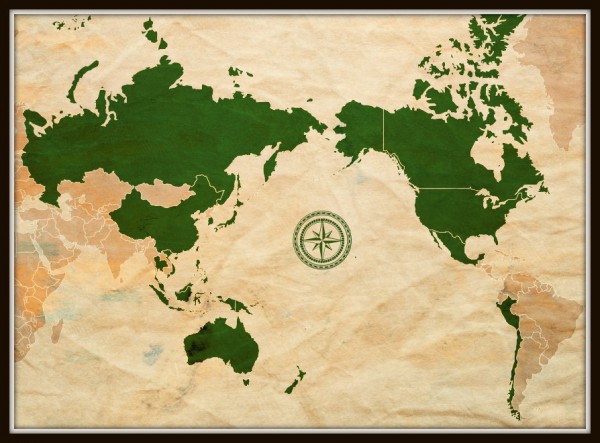
Last week, the international spotlight went to the Asia Pacific, a region that accounts for 54% of world GDP and 44% of world trade (Mexican Ministry of Economy, 2014) and has the participation of major countries like USA, China, Russia and Japan. The 21 leaders of the Asia Pacific region gathered at the 2014 APEC summit to conduct important negotiations concerning bilateral and multilateral economic cooperation, investment promotion and strengthening of international trade.
At this summit, China and the United States have achieved understandings for the elimination of tariffs on high-tech products; they have made progress in visa policy; and both nations seek to develop new strategies to increase cooperation regarding climate change.
In this context, it should be noted the interest shown by China to improve relations with other States. One of the most emblematic examples was a high level meeting between Japan and the Chinese government to start normalizing diplomatic relations and ease of tensions in regards to the territorial dispute over the Diaoyu or Senkaku Islands in the East China Sea.
During the APEC summit, Russia and China strengthened their relations through the implementation of major trade agreements in order to reduce the dependence that both countries have towards Western economies. Among other things, Russia seeks to reorient one significant part of Russian gas sales to Asia, while at the same time China tries to guarantee a more stable long-term supply in order to meet its energy demand. Both countries are planning to develop the construction of new pipelines and joint works on hydrocarbons.
Moreover, in the context of this forum, China has managed to finalize negotiations to materialize a free trade agreement with Australia and tariff reduction with South Korea. Also, with regards to Latin America countries on the Pacific shore, Mexico and China have signed several bilateral agreements in the areas of energy, infrastructure, high technology and tourism; furthermore tensions were reduced regarding the cancellation by the Mexican Government of a multimillion dollar infrastructure project that had been granted to China.
When it comes to international relations in Asia, regional free trade and cooperation agreements have been a key point that has been promoted, separately, by China and the United States. The Asian giant has received the support of the APEC members for the creation of the “Free Trade Area of the Asia-Pacific” (FTAAP), which aims to revitalize the ancient Silk Road and to consolidate the newly created Asian Infrastructure Investment Bank (AIIB). However, despite the magnitude of this project, the treaty does not contemplate the participation of the United States or Japan.
Meanwhile, the United States has tried to increase its involvement in the area by making progress in the negotiations of the “Trans-Pacific Partnership” (TPP); a treaty with the participation of Asian and American countries (Australia, New Zealand, Singapore, Japan, Malaysia, United, States, Canada, Chile, Peru, Mexico, Brunei and Vietnam). Even if the TPP is smaller than the TPAAP, it has great strategic importance in the development of the United States’ industry and trade, which will allow to counter the increasing Chinese economic interest and expansion in that area.
Chinese and American proposals to develop free trade agreements in the Asia Pacific region reflect the evolution of highly relevant events in the international order; given that in recent years China and the United States have been projecting their foreign economic policy towards each other’s spheres of influence; while at the same time, they are excluding the participation of the other in their respective economic integration treaties.
This is due to the fact that in many Asian countries, China plays a very similar role to the one that the United States has with Latin American countries. When it comes to export volume, amount of investment and financing channels both nations are vital partners for many of its regional neighbors. Also, from a political point of view, both countries have important influence on the development of its neighbors’ international relations and in decision-making in regional and international organizations.
In recent decades, China has gradually increased its presence in Latin America; it has become one of the largest buyers of raw materials from Latin American countries. In fact, it is currently investing in infrastructure and providing important credit lines to several countries in the region, while increasing its presence in strategic areas such as hydrocarbons and telecommunications. To some Latin American countries, Chinese investment has contributed to reduce their economic dependence on the United States, as well as to have more leverage in trade and political negotiations with the US government.
For its part, the Obama Administration, with its «pivot to Asia» doctrine, is trying to redirect part of its foreign policy strategies towards strengthening relations with its partners in the Asia Pacific. This shift in American politics should not come as a surprise, because the Asia Pacific region is an area of great economic dynamism that has been growing considerably in recent decades; it represents an interesting market with great buying power, and in which many countries want to have a bigger participation. In addition, the TPP could function as a peaceful mechanism to reassure the commitments of the United States towards its Asian allies and also to help to counterbalance some of the tensions that they have with China.
On the other hand, in the framework of APEC, China wants to revitalize its participation in the area through attractive incentives, as well as with economic, energetic and military cooperation. In some ways, tensions in Ukraine, the advance of the Islamic State in Iraq and Syria, and problems generated during the Arab Spring have benefited the Chinese foreign policy in Asia, because these are events that have a considerable impact on important areas of interest of the United States and that have forced to divert of mitigate America’s political force in the Asia Pacific.
Two giants are in a silent but obvious race for the Asia Pacific. Both want to secure their spheres of influence, while quietly looking to expand to the other side of the Pacific Ocean without getting into irreparable confrontations. The Sino-American relation is one of the most transcendent in the international arena; it is a relation marked by large systemic and political differences but also based on a great economic interdependence. Nowadays, it constitutes an essential factor in the stability and development of the world order.
It will be important to follow closely the role of these two mega-countries and the policy developed by Asian and Latin American nations with interests in the Asia Pacific region; since it is a occasion in which small and medium states of both continent may have a better bargaining position as regional stakeholders that may enable them to secure better benefits for their populations and their economies. Many of these countries have bilateral free trade agreements with either the United States or China, so the prospect of a regional agreement in the area would give them entrance to a larger market while consolidating themselves as strategic partners of the United States and/or China.
On both coasts of the Pacific Ocean, American and Chinese giants have awakened and they are eager to cross the seas that separate them from their new markets.
 ZIGZAG AVENUE
